Best Toothpaste for Every Age, Medical Condition, and Dental Need in India

The wrong toothpaste can make a dental problem feel worse. A very abrasive whitening paste may irritate worn enamel. A “herbal” paste without fluoride may not protect a cavity-prone child. A strong adult paste may be too much for a toddler who still swallows foam.
The best choice is not the most expensive tube. It is the one that matches age, cavity risk, gum health, enamel condition, medical history, and brushing habits.
This guide is written for India, where common options include Colgate, Sensodyne, Pepsodent, Oral-B, Dabur, Himalaya, Thermoseal, Vantej, RA Thermoseal and several prescription dental products. Product formulas can change, so always check the ingredient label on the pack before buying.
This article is for general education. It cannot replace a dental examination, especially if there is pain, swelling, bleeding gums, ulcers, loose teeth, or sudden sensitivity.

How to choose toothpaste without getting confused
Most toothpaste marketing talks about freshness, whitening, herbs, salt, charcoal, or “complete protection”. The label matters more than the front of the pack.
A useful toothpaste usually does one or more of these jobs:
Dental need | Ingredient or feature to look for | Why it helps |
Cavity prevention | Fluoride, often sodium fluoride or sodium monofluorophosphate | Fluoride helps remineralise early enamel damage and reduces tooth decay risk. This is supported by major dental bodies such as the American Dental Association and FDI World Dental Federation. |
Tooth sensitivity | Potassium nitrate, stannous fluoride, arginine with calcium carbonate | These ingredients help reduce nerve response or block exposed dentine tubules when used regularly. |
Gum bleeding or gingivitis | Stannous fluoride, zinc salts, sometimes chlorhexidine under dental advice | These may reduce plaque bacteria. Chlorhexidine is usually short-term because it can stain teeth and alter taste. |
Stain removal | Hydrated silica or other mild polishing agents | Helps remove surface stains from tea, coffee, tobacco, or food, but will not change the natural tooth colour. |
Dry mouth | SLS-free, mild flavour, fluoride-containing paste | Less foaming may reduce irritation. Fluoride is important because dry mouth raises cavity risk. |
Mouth ulcers or burning | SLS-free, non-spicy toothpaste | Sodium lauryl sulphate can irritate some mouths. Strong mint may sting ulcers. |
Children | Age-appropriate fluoride paste in a tiny amount | Children need cavity protection, but the quantity must be controlled to avoid swallowing too much. |
The most important ingredient for most people is fluoride. It does not “fill” a cavity that already needs treatment, but it can strengthen enamel and slow early demineralisation. In India, many family toothpastes contain around 1,000 ppm fluoride, while some adult toothpastes may be around 1,450 ppm. Always check the tube.
A second point is abrasiveness. Whitening, charcoal, and smokers’ toothpastes can feel powerful, but regular use on already worn teeth may worsen sensitivity.
If there is one rule to remember, choose the toothpaste for the problem inside the mouth, not the promise on the front of the box.
Best toothpaste by age group
Age changes everything. A baby, a 5-year-old, a teenager with braces, and an older adult with dry mouth all need different oral-care decisions.
Babies and toddlers up to 3 years
The first teeth usually appear around 6 months of age, though timing varies. Once teeth erupt, cleaning should start.
For this age group, the main risk is swallowing toothpaste. The American Dental Association advises a smear or rice-grain-sized amount of fluoride toothpaste for children under 3. Parents should brush, not the child alone.
Best type to use:
Fluoride children’s toothpaste in a rice-grain amount
Mild flavour
Low foam
No strong whitening, charcoal, salt, or adult “fresh breath” formulas
Indian examples to check:
Product example | What to check on the label | Amazon.in search link |
Colgate Kids toothpaste for younger children | Age range and fluoride content | |
Mamaearth Berry Blast Kids Toothpaste | Check whether the selected variant has fluoride or is fluoride-free | |
Chicco toothpaste | Age range, fluoride status, and swallowing warning |
Many baby toothpastes in India are fluoride-free. They may be acceptable for very low-risk children, but fluoride gives better cavity protection. If the child has early decay, sleeps with milk in the bottle, eats frequent sweets, or has visible white spots on teeth, ask a paediatric dentist about fluoride strength.
Children aged 3 to 6 years
Children in this age group can spit better, but many still swallow paste. Use a pea-sized amount and supervise brushing.
Best type to use:
Children’s fluoride toothpaste
Pea-sized amount only
Soft toothbrush
Twice daily brushing, especially before sleep
Good examples:
Product example | Suitable use | Amazon.in search link |
Colgate Kids 2 to 5 or 6 plus variants | Daily brushing for children, check age on pack | |
Pepsodent Kids | Daily brushing, check fluoride content | |
Oral-B Kids toothpaste | Often paired with kids’ brushes, check age and fluoride |
Avoid adult whitening toothpastes for this group. Also avoid charcoal powders and tooth powders. They can be abrasive, messy, and hard to dose safely.
Children aged 6 to 12 years
At this age, permanent molars erupt. These back teeth have deep grooves, which makes them more prone to cavities. Many children also start eating outside food, packaged snacks, chocolates, and sweet drinks more often.
Best type to use:
Fluoride toothpaste, usually family toothpaste is acceptable if the child can spit
Pea-sized amount
No rinsing too much after brushing, just spit well
Dental sealants if molars have deep grooves and the dentist recommends them
Useful Indian options:
Product example | Why it may fit | Amazon.in search link |
Colgate Strong Teeth | Common family fluoride toothpaste for cavity prevention | |
Pepsodent Germicheck | Common fluoride family toothpaste, check label | |
Oral-B Cavity Defense | Fluoride-based cavity protection, check current formula |
A child with repeated cavities needs more than a “better paste”. The dentist may advise fluoride varnish, sealants, diet changes, and review of brushing technique.
Teenagers and young adults
Teenagers often have three specific issues: braces, mouth odour, and early gum bleeding. Some also overuse whitening products before college, events, or weddings.
Best type to use:
Fluoride toothpaste for daily use
Anti-plaque or gum-care paste if gums bleed
Desensitising paste if enamel wear or orthodontic sensitivity occurs
Avoid harsh whitening products during braces unless the orthodontist agrees
Examples in India:
Product example | When it may help | Amazon.in search link |
Colgate Total | Daily plaque and cavity protection, check active ingredients | |
Sensodyne Fresh Gel | Sensitivity with fresh taste, check for potassium nitrate or fluoride variant | |
Himalaya Complete Care | Herbal preference, check fluoride status before using as sole cavity-prevention paste |
For braces, toothpaste alone cannot clean around brackets. Interdental brushes, orthodontic brushes, and fluoride mouthwash often matter as much as the paste.
Adults
Most adults do best with a fluoride toothpaste matched to one main problem: cavities, gum disease, stains, sensitivity, dry mouth, or enamel erosion.
For a healthy adult with no major dental problem, a standard fluoride toothpaste is enough. For people with repeated fillings, gum bleeding, receding gums, or worn enamel, a targeted paste is better.
Everyday Indian choices include:
Product example | Best suited for | Amazon.in search link |
Colgate Strong Teeth | General cavity prevention | |
Pepsodent Germicheck | General family use | |
Sensodyne Repair and Protect | Sensitive teeth, check active ingredient | |
Colgate Sensitive Plus | Sensitive teeth with fluoride, check label |
The Amazon links above are plain search links, not affiliate links. If buying online, confirm seller authenticity, expiry date, tube seal, and exact variant.
Older adults
Older adults often deal with gum recession, dry mouth, medicines that reduce saliva, root cavities, dentures, crowns, bridges, implants, and exposed roots.
Best type to use:
Fluoride toothpaste, often with sensitivity control
SLS-free paste if the mouth feels dry or ulcer-prone
Non-abrasive paste for exposed roots and crowns
Denture cleanser for dentures, not regular toothpaste
Why regular toothpaste can be a problem for dentures: many toothpastes contain abrasives designed for enamel. Dentures are acrylic or other materials and can scratch. Scratches collect stains and bacteria.
Useful examples:
Product example | When it may help | Amazon.in search link |
Sensodyne Rapid Relief | Short-term and daily sensitivity management, check directions | |
RA Thermoseal | Sensitivity, often used on dental advice | |
Vantej | Sensitivity and exposed dentine, check active ingredient | |
Polident denture cleanser | Denture cleaning, not for natural teeth |
A new sensitive spot in an older adult should not be assumed to be “normal age”. It may be root decay, a cracked tooth, a loose filling, or gum recession.

Best toothpaste for common dental conditions
Dental symptoms often point to the type of paste required. They can also signal a problem that toothpaste cannot fix.
Cavities and high decay risk
Choose a fluoride toothpaste. This is the most evidence-backed choice for cavity prevention.
Best for:
Frequent cavities
White chalky spots on teeth
Sweet snacking
Braces
Dry mouth
Poor saliva flow
Exposed tooth roots
Indian product examples:
Product example | Ingredient direction | Amazon.in search link |
Colgate Strong Teeth | Fluoride family toothpaste | |
Oral-B Cavity Defense | Fluoride cavity protection | |
Pepsodent Germicheck | General fluoride toothpaste, check label |
If a tooth already has a hole, food lodgement, pain, or black soft decay, toothpaste will not repair it. It may reduce further risk, but the tooth needs dental treatment.
Sensitive teeth
Sensitivity usually happens when dentine is exposed. Dentine has tiny tubules that connect to the nerve inside the tooth. Cold water, sweets, brushing, or air can trigger pain.
Common causes include:
Gum recession
Enamel erosion from acidity
Tooth grinding
Aggressive brushing
Cracked teeth
Worn fillings
Teeth whitening overuse
Desensitising toothpaste ingredients include potassium nitrate, stannous fluoride, and arginine-based formulas. These usually need regular use for days to weeks. Some dentists also advise rubbing a small amount on the sensitive area before sleep, then spitting without rinsing.
Indian examples:
Product example | What to check | Amazon.in search link |
Sensodyne Rapid Relief | Desensitising active ingredient and fluoride | |
Sensodyne Repair and Protect | Stannous fluoride variant in many markets, check Indian label | |
Colgate Sensitive Plus | Potassium nitrate or similar desensitising ingredient, check label | |
RA Thermoseal | Often used for sensitivity, check dental advice | |
Vantej | Desensitising toothpaste, check active ingredients |
See a dentist if the pain is sharp, one-sided, lasts after cold is removed, wakes you at night, or appears after biting. That pattern may fit a crack, deep cavity, or nerve inflammation.
Gum bleeding and gingivitis
Bleeding gums are usually a plaque problem, not a toothpaste deficiency. A gum-care toothpaste may help, but cleaning along the gumline matters more.
Best type to use:
Fluoride toothpaste with anti-plaque support
Stannous fluoride or zinc-containing formulas, where available
Soft brush
Interdental cleaning
Professional scaling if tartar is present
Indian examples:
Product example | When it may help | Amazon.in search link |
Colgate Total | Plaque control and cavity protection, check current actives | |
Parodontax | Gum bleeding support, check fluoride variant | |
Himalaya Gum Expert | Herbal gum-care option, check fluoride status |
Chlorhexidine gels and mouthwashes can reduce bacteria, but they are not routine long-term toothpaste substitutes. Long use can cause brown staining, taste change, and more tartar in some people. Use them only for the duration advised by a dentist.
Bad breath
Most bad breath starts from the tongue, gums, cavities, dry mouth, tobacco, or food lodgement. A strong mint toothpaste may cover the smell briefly, but it may not treat the cause.
Best type to use:
Fluoride toothpaste
Anti-plaque paste if gums bleed
Tongue cleaner
Dental treatment for cavities or gum pockets
Dry-mouth care if saliva is low
Useful examples:
Product example | Why it may fit | Amazon.in search link |
Colgate MaxFresh | Short-term freshness, check fluoride | |
Pepsodent Germicheck | General daily use | |
Colgate Total | Plaque control support |
If bad breath continues despite brushing and tongue cleaning, look for gum disease, tonsil stones, gastric reflux, sinus problems, uncontrolled diabetes, or dry mouth from medication.
Yellow teeth and stains
Tooth colour comes from two things: outer stains and natural inner dentine colour. Toothpaste can help with external stains from tea, coffee, tobacco, turmeric, or paan. It cannot bleach the tooth from inside like professional whitening.
Best type to use:
Mild whitening toothpaste with fluoride
Avoid daily harsh charcoal powders
Avoid scrubbing hard
Examples:
Product example | When it may help | Amazon.in search link |
Colgate Visible White | Surface stain reduction, check sensitivity response | |
Oral-B 3D White | Surface stain polishing, check fluoride | |
Sensodyne Extra Whitening | Stain control with sensitivity focus |
People with sensitivity, gum recession, acid erosion, or thin enamel should be careful with whitening formulas. A dentist can suggest safer whitening after checking enamel and gum health.
Braces, aligners, crowns, bridges, and implants
These do not need a fancy toothpaste. They need careful plaque control.
Best type to use:
Fluoride toothpaste
Low to moderate abrasiveness
Interdental brushes or floss threaders
Water flosser if recommended
Non-abrasive paste around crowns and implants
Avoid charcoal and rough powders around braces, crowns, veneers, and implants. They may scratch surfaces and make stains worse over time.

Best toothpaste for medical conditions
Medical history changes oral risk. A toothpaste choice should support the condition, not fight it.
Diabetes
Diabetes raises the risk of gum disease, especially when blood sugar stays high. Gum infection can also make glucose control harder. This two-way link is recognised by major dental and diabetes organisations.
Best type to use:
Fluoride toothpaste
Anti-plaque or gum-care paste if gums bleed
SLS-free option if the mouth is dry or ulcer-prone
Regular professional cleaning
Suitable examples:
Product example | Why it may fit | Amazon.in search link |
Colgate Total | Plaque and cavity support | |
Parodontax fluoride variant | Gum bleeding support, check fluoride | |
Sensodyne Repair and Protect | Sensitivity plus fluoride support |
Bleeding gums in diabetes should not be managed only with herbal paste or mouthwash. Scaling and periodontal care may be needed.
Pregnancy
Pregnancy can increase gum swelling and bleeding because of hormonal changes. Nausea, vomiting, and frequent snacking can also increase enamel erosion and cavity risk.
Best type to use:
Fluoride toothpaste
Mild flavour if mint triggers nausea
Soft brush
Rinse with water after vomiting, then wait around 30 minutes before brushing
Do not brush immediately after vomiting. Acid softens enamel for a short time. Brushing right away may increase enamel wear.
Examples:
Product example | Why it may fit | Amazon.in search link |
Colgate Strong Teeth | Daily fluoride protection | |
Sensodyne Fresh Gel | If sensitivity develops | |
SLS-free toothpaste options | If ulcers or nausea occur |
Dental cleaning during pregnancy is usually safe and often helpful. Tell the dentist about pregnancy and any medicines.
Dry mouth from medicines, ageing, or radiation therapy
Saliva protects teeth. It buffers acids, washes food away, and carries minerals. Dry mouth greatly increases the risk of root cavities and fungal infections.
Common causes include:
Blood pressure medicines
Antidepressants
Antihistamines
Diabetes
Sjögren’s syndrome
Cancer radiation near the head and neck
Mouth breathing
Age-related medicine use
Best type to use:
Fluoride toothpaste
SLS-free mild paste
Alcohol-free mouth rinse if needed
Saliva substitutes or gels if prescribed
Frequent water sips
Examples:
Product example | Why it may fit | Amazon.in search link |
Sensodyne Pronamel | Often used for enamel protection, check Indian availability and label | |
SLS-free toothpaste India | Helps some dry or ulcer-prone mouths | |
Biotene oral care products | Dry-mouth support, check availability |
For radiation-related dry mouth, a dentist may prescribe high-fluoride products or custom fluoride trays. Do not self-prescribe high-fluoride gels.
Acid reflux, vomiting, and enamel erosion
GERD, frequent vomiting, eating disorders, acidic drinks, and lemon water habits can wear enamel. Teeth may look yellow, shiny, thin, or chipped at the edges.
Best type to use:
Fluoride toothpaste
Low-abrasion sensitivity paste
Enamel-protection paste
No charcoal or harsh whitening products
Examples:
Product example | Why it may fit | Amazon.in search link |
Sensodyne Pronamel | Enamel erosion support, check label | |
Sensodyne Repair and Protect | Sensitivity linked to enamel wear | |
Colgate Sensitive Plus | Sensitive teeth with fluoride |
After an acid attack, rinse with plain water. Brush after a waiting period rather than immediately.
Mouth ulcers, burning mouth, and oral allergies
Some people react to strong flavours, cinnamon, menthol, whitening agents, or SLS. Others get recurrent ulcers that sting badly with normal toothpaste.
Best type to use:
SLS-free
Mild flavour
No whitening agents
No strong herbal oils if they sting
Fluoride if tolerated
Search options:
Product type | When to consider it | Amazon.in search link |
SLS-free toothpaste India | Recurrent ulcers or burning with regular paste | |
Mild fluoride toothpaste | When cavity risk is also present | |
Kids mild toothpaste for adults | Sometimes useful when adult mint is intolerable, check fluoride |
Persistent ulcers lasting more than two weeks need a dental or medical examination.
Indian brand examples by ingredient and purpose
The table below is a practical buying guide. It does not rank brands. It groups them by the problem they are commonly bought for. Check the label because variants differ.
Need | Ingredient or type | Indian examples | Amazon.in search link |
Everyday cavity protection | Fluoride | Colgate Strong Teeth, Pepsodent Germicheck, Oral-B Cavity Defense | |
Sensitive teeth | Potassium nitrate, stannous fluoride, arginine | Sensodyne Rapid Relief, Sensodyne Repair and Protect, Colgate Sensitive Plus, RA Thermoseal, Vantej | |
Gum bleeding | Anti-plaque or gum-care formulas | Colgate Total, Parodontax, Himalaya Gum Expert | |
Herbal preference | Herbal extracts, sometimes without fluoride | Dabur Red, Himalaya Complete Care, Vicco Vajradanti | |
Whitening | Mild polishing agents | Colgate Visible White, Oral-B 3D White, Sensodyne Extra Whitening | |
Children | Age-specific fluoride or fluoride-free depending on variant | Colgate Kids, Pepsodent Kids, Oral-B Kids, Chicco | |
Dry mouth or ulcers | SLS-free, mild flavour | Search by SLS-free rather than only by brand | |
Dentures | Denture cleanser, not tooth paste | Polident and other denture-cleaning tablets |
A note on herbal toothpastes: some people like Dabur Red, Himalaya, Meswak, or Vicco because of taste and tradition. They may help with freshness and brushing compliance. But if the paste is fluoride-free, it may not be the best sole option for someone at high cavity risk. A balanced approach is to use a fluoride paste at night and discuss herbal preferences with a dentist.
A note on charcoal: charcoal toothpaste became popular for whitening, but dental groups have raised concerns about abrasiveness and lack of strong evidence for long-term benefits. It may remove surface stains, but regular use can irritate sensitive teeth and exposed roots.
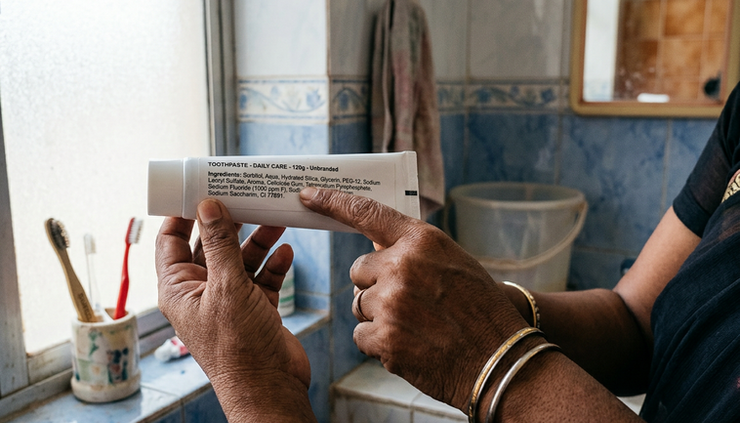
How to use toothpaste so it actually works
The best tube will fail if the brushing method is poor. Technique often matters more than brand.
Use these rules:
Brush twice daily, especially before sleep.
Use a soft-bristled brush.
Brush for about two minutes.
Use gentle circular or short strokes near the gumline.
Spit after brushing, but do not rinse aggressively.
Clean between teeth once daily with floss or interdental brushes.
Replace the brush every 3 months or earlier if bristles flare.
Do not scrub harder for yellow teeth or bad breath.
Do not share toothpaste directly between infected or ulcer-prone mouths.
For children:
Adults should place the paste on the brush.
Under 3 years, use a rice-grain smear.
Age 3 to 6 years, use a pea-sized amount.
Supervise brushing until the child can spit reliably and clean properly.
Keep toothpaste out of reach if the child tends to eat it.
For sensitivity:
Use the desensitising paste twice daily.
Do not switch brands every few days.
Give it time to work.
Avoid brushing immediately after acidic foods or drinks.
Ask a dentist if one tooth hurts more than the rest.
For gum bleeding:
Do not stop brushing the bleeding area.
Use a soft brush and clean gently at the gumline.
Book scaling if tartar is visible or bleeding continues.
Toothpaste can reduce plaque, but it cannot remove hardened tartar.
For dry mouth:
Avoid alcohol-based mouthwash.
Avoid strong mint if it burns.
Sip water often.
Ask about saliva substitutes and high-fluoride care if cavities repeat.
The safest buying habit is simple: buy a smaller tube first when trying a new formula. If it stings, worsens sensitivity, causes ulcers, or feels too abrasive, stop and seek advice.
The practical takeaway
For most people in India, a fluoride toothpaste used twice daily is the right base choice. Children need the correct amount, not a full strip. Sensitive teeth need potassium nitrate, stannous fluoride, or similar desensitising ingredients. Bleeding gums need plaque control and often professional cleaning. Dry mouth, diabetes, pregnancy, GERD, braces, dentures, and ulcers all need a more specific choice.
Use brand names as examples, not as blind recommendations. Labels change. Dental conditions change. A paste that suits one person in the family may be wrong for another.
If there is pain, swelling, bleeding, loose teeth, pus, a broken filling, a hole, or sensitivity that affects daily life, toothpaste is only support. The real next step is a dental check-up and a diagnosis.


Comments