Best Toothbrush Types in India by Age and Dental Condition

Choosing a brush looks simple until the dental aisle offers soft, medium, kid-size, battery-powered, orthodontic, interdental, bamboo, charcoal, and “gum care” options. The wrong choice can make brushing painful, miss plaque around braces, or irritate bleeding gums.
Dentists usually care less about fancy labels and more about a few basics: soft bristles, the right head size, good technique, and regular replacement. The Indian market has plenty of good options across pharmacies, supermarkets, dental clinics, and online stores, including in cities such as Bengaluru, Mumbai, Delhi, Chennai, Hyderabad, Pune, and smaller towns.
This guide explains the main toothbrush types available in India, which age groups can use them, and which brushes are better suited for common dental and medical conditions.
This article is for general education. For gum disease, pain, ulcers, loose teeth, post-surgery care, or medical conditions affecting the mouth, a dentist’s advice should guide the final choice.
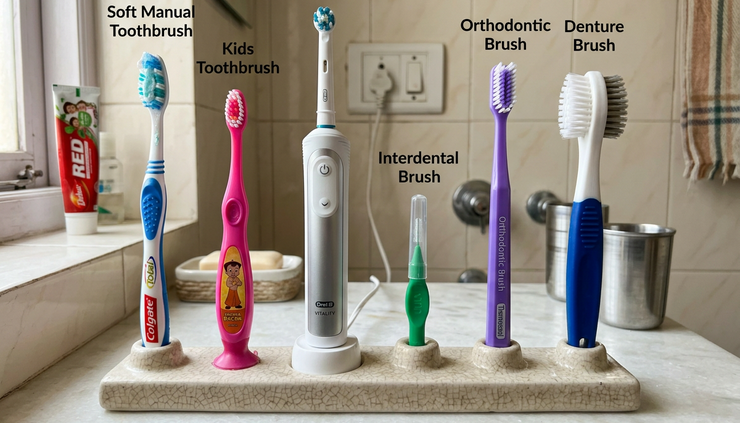
What makes a toothbrush safe and effective
A good brush should remove plaque without injuring teeth or gums. Plaque is the sticky bacterial film that contributes to cavities, bad breath, and gum inflammation. The Indian Dental Association and international dental bodies commonly recommend brushing twice daily with fluoride toothpaste, using gentle pressure.
Before choosing a type, check these points:
Bristle softness Soft or extra-soft bristles suit most people. Medium and hard bristles can wear enamel and push gums back if used aggressively.
Head size The brush head should comfortably reach the back teeth. A smaller head often cleans better than a large one because it gives more control.
Handle grip A thick, non-slip handle helps children, older adults, and people with arthritis or limited hand movement.
End-rounded bristles Rounded bristle tips are gentler on gums than sharp-cut bristles.
Replacement timing Replace a brush every 3 months, or sooner if bristles spread out. Replace it after oral infections if advised by a dentist.
Technique Even the best Toothbrush fails if used with force. Small circular motions at the gumline usually work better than harsh horizontal scrubbing.
Main types of toothbrushes available in India
Manual soft-bristled toothbrushes
This is the standard choice for most people. Manual brushes are inexpensive, widely available, and effective when used properly. Look for labels such as “soft”, “sensitive”, “gum care”, or “extra soft”.
Best for:
Most adults and teenagers
Mild sensitivity
Daily brushing
People who brush gently and thoroughly
Avoid hard bristles unless a dentist specifically recommends them for a particular use, which is uncommon.
Medium and hard-bristled toothbrushes
These are still sold in India, but they are not ideal for routine brushing. Many people choose them because they feel “stronger” or “cleaner”, yet hard bristles can damage gums and enamel over time.
Better use:
Cleaning removable appliances, not natural teeth
Cleaning dentures with a denture brush, not a regular hard brush
Not ideal for:
Gum recession
Sensitivity
Bleeding gums
Children
Root exposure
Brushing with high pressure
Electric and battery-powered toothbrushes
Powered brushes are now common in Indian online stores and large pharmacies. Some use oscillating-rotating heads, while others use sonic vibrations. Many have timers and pressure sensors, which help people brush for long enough and avoid force.
A Cochrane review has reported that powered brushes can reduce plaque and gingivitis more than manual brushes over time, especially oscillating-rotating models. That does not mean everyone needs one, but they can be useful.
Best for:
People with poor brushing technique
Gingivitis or plaque build-up
Braces, if the brush head is suitable
Older adults
People with limited hand movement
Children who resist brushing, under supervision
An Electric toothbrush should still have a soft head. Brushing harder with power does not clean better.
Kids’ toothbrushes
Children need age-specific brushes because their mouths, gums, and grip strength change quickly. A child’s brush usually has a small head, soft bristles, and a thicker handle.
Best for:
Toddlers and children up to 12 years
Supervised brushing
Building brushing habits
For children under 6 years, adults should supervise brushing and manage toothpaste quantity to reduce swallowing.
Finger brushes and silicone baby brushes
These are soft silicone brushes that fit over an adult’s finger. They are often used for babies before and during early tooth eruption.
Best for:
Cleaning gums in infants
First baby teeth
Getting a baby used to oral cleaning
Once more teeth erupt, shift to a small, soft infant brush.
Orthodontic toothbrushes
Orthodontic brushes have a V-shaped bristle pattern or a special head designed to clean around brackets and wires. People with braces often trap food around brackets, which raises the risk of white spots, cavities, and gum swelling.
Best for:
Fixed braces
Retainers, when recommended
Cleaning around wires and brackets
These brushes work best when paired with interdental brushes or floss threaders.
Interdental brushes
Interdental brushes are tiny brushes designed to clean between teeth, under bridges, and around braces or implants. They come in different sizes. The correct size should fit snugly, not painfully.
Best for:
Gaps between teeth
Gum disease maintenance
Braces
Implants
Bridges
Food trapping between teeth
They do not replace a regular brush. They clean areas a normal brush cannot reach.
End-tuft or single-tuft brushes
These have a small cluster of bristles at the tip. They are useful for precise cleaning.
Best for:
Wisdom tooth areas
Crowded teeth
Behind the last molars
Gumline around crowns
Braces and implants
Children with partially erupted teeth, with adult help
Denture brushes
Denture brushes have broader, firmer bristles and a shape that cleans removable dentures. They should not be used aggressively on natural teeth.
Best for:
Full dentures
Partial dentures
Removable dental plates
Use denture cleaning products as advised. Regular toothpaste can be abrasive for some denture materials.
Bamboo and eco-friendly toothbrushes
Bamboo brushes are popular in India as a lower-plastic option. They can work well if the bristles are soft and the head size is comfortable. Many bamboo brushes still use nylon bristles, so disposal depends on the brand’s design.
Best for:
Adults with healthy gums
People who prefer low-plastic products
Travel, if kept dry
Check that the bristles are soft. Eco-friendly does not automatically mean gum-friendly.
Charcoal toothbrushes
Charcoal-infused bristles are marketed for whitening and odour control. Evidence for major whitening benefits is limited. The bigger issue is bristle softness and brushing technique.
Best for:
People who like the feel, if bristles are soft
General use, if approved by a dentist
Do not use harsh charcoal toothpaste frequently without professional advice, especially with sensitivity or enamel wear.

Best toothbrush by age group
Age matters because mouth size, motor skills, gum sensitivity, and dental risks change over time.
Age group | Best brush type | What to look for | What to avoid |
0 to 6 months | Clean soft cloth or silicone finger brush | Gentle gum cleaning after feeds | Forceful rubbing |
6 months to 2 years | Infant soft brush or finger brush | Very small head, soft bristles, adult control | Adult-size brushes |
2 to 5 years | Toddler soft brush | Thick handle, small head, fun design | Hard bristles, unsupervised brushing |
6 to 12 years | Kids’ soft brush | Small to medium head, easy grip | Large adult heads |
13 to 18 years | Soft manual or powered brush | Focus on braces, plaque control, gumline cleaning | Brushing too fast or too hard |
Adults | Soft manual, powered, interdental as needed | Comfortable head size, good reach to back teeth | Hard bristles for daily use |
Pregnant adults | Extra-soft or soft brush | Gentle gumline brushing, nausea-friendly small head | Skipping brushing due to gum bleeding |
Older adults | Soft manual, powered brush, interdental brush | Thick handle, pressure control, easy grip | Stiff bristles, heavy brushing |
Children should not simply “grow into” an adult brush too early. A large head can miss areas and trigger gagging. Adults with small mouths may also prefer compact-head brushes.
Best toothbrush by dental or medical condition
Dental conditions need targeted cleaning. The brush should match the problem.
Condition | Recommended brush | Why it helps |
Bleeding gums or gingivitis | Extra-soft or soft brush, powered brush with pressure sensor | Cleans plaque gently without worsening irritation |
Tooth sensitivity | Extra-soft brush | Reduces abrasion near exposed root surfaces |
Gum recession | Extra-soft brush, compact head | Limits trauma to the gumline |
Braces | Orthodontic brush, interdental brush, single-tuft brush | Cleans around brackets, wires, and tight corners |
Dental implants | Soft brush, interdental brush, single-tuft brush | Helps clean the gumline around implant crowns |
Crowns and bridges | Soft brush, interdental brush, floss threader | Cleans margins where plaque collects |
Crowded teeth | Compact soft brush, single-tuft brush | Reaches rotated and overlapping teeth better |
Wisdom tooth area | Small-head brush, end-tuft brush | Reaches far back areas with better control |
Dry mouth | Soft brush | Helps prevent injury when tissues are dry and delicate |
Mouth ulcers | Ultra-soft brush | Reduces pain and accidental scraping |
After dental surgery | Surgical ultra-soft brush, only if dentist allows | Protects healing tissues |
Dentures | Denture brush for dentures, soft brush for gums | Cleans appliance and oral tissues separately |
Arthritis or weak grip | Powered brush or thick-handle manual brush | Requires less hand movement |
Diabetes with gum risk | Soft brush, interdental brush, regular dental review | Supports plaque control, which matters in gum care |
Bleeding gums should not be ignored. Many people stop brushing the bleeding area, but plaque can make inflammation worse. Gentle cleaning and a dental check-up are usually the safer path.

How to choose for common situations
If gums bleed during brushing
Choose an extra-soft brush with a small head. Brush gently at the gumline rather than scrubbing the tooth surface. If bleeding continues for more than a week or two, get a dental check-up. Persistent bleeding can point to gingivitis, periodontitis, vitamin issues, medication effects, or medical conditions.
If teeth feel sensitive to cold water
Use an extra-soft brush and avoid aggressive side-to-side brushing. Sensitivity often comes from enamel wear, gum recession, cavities, cracked teeth, or recent dental treatment. A desensitising toothpaste may help, but sensitivity that lingers needs diagnosis.
If wearing braces
Use a three-part routine:
Soft orthodontic brush for the front and chewing surfaces.
Interdental brush around brackets and under wires.
Fluoride toothpaste and dentist-recommended rinses if needed.
A water flosser can help remove food, but it does not fully replace brushing.
If caring for implants or bridges
Use a soft brush around the gumline. Add interdental brushes if spaces allow. Do not force an interdental brush into a tight space, as it can injure the gum or damage dental work.
If brushing for a child
Choose by age, not by cartoon design alone. The brush should fit the mouth. Adults should brush or supervise until the child has enough hand control, often around primary school age. Even then, a quick parent check helps.
If an older adult has weak grip
A powered brush or a manual brush with a thicker handle can make brushing easier. Some people wrap the handle with a grip aid, but it must stay clean and dry to avoid hygiene issues.
Brushing habits matter as much as brush type
The World Health Organization links oral diseases such as dental caries and gum disease to plaque, sugar intake, tobacco, alcohol, and access to prevention. A brush is only one part of oral care.
For better results:
Brush twice daily for about 2 minutes.
Use fluoride toothpaste unless a dentist advises otherwise.
Clean the gumline gently.
Spit after brushing, and avoid rinsing heavily with water immediately after if using fluoride toothpaste.
Clean between teeth once daily with floss or interdental brushes.
Replace brushes when bristles fray.
Store upright and let the brush air-dry.
Do not share brushes.
Brushing after every sugary snack is not always practical. A more realistic plan is to reduce frequent sugar exposure, rinse with water after sweets, and brush well twice daily.

What to check before buying in India
Indian buyers often compare price, brand, and online ratings. Those help, but the clinical features matter more.
Use this quick checklist:
The label says soft or extra soft.
The head is small enough to reach back teeth.
The handle feels steady when wet.
The bristles are even and not too stiff.
For children, the age range matches the child.
For braces, implants, or bridges, the brush is designed for that use.
Replacement heads are easily available if buying a powered brush.
The product comes from a reliable seller, especially online.
Price does not always equal better cleaning. A simple soft brush used well can outperform an expensive brush used carelessly.
FAQ
Which toothbrush is best for most adults?
A soft-bristled manual brush with a compact head is best for most adults. It should reach the back teeth comfortably and clean the gumline without pain.
Is an electric brush better than a manual brush?
A powered brush can remove plaque well and may help people with gingivitis, braces, poor brushing technique, or limited hand movement. A manual brush can also work well if used correctly.
Are hard bristles good for yellow teeth?
No. Hard bristles do not safely whiten teeth. They can wear enamel and irritate gums. Yellowing may come from stains, enamel thickness, tartar, or diet, so a dental cleaning or whitening advice is safer.
What brush should be used after gum surgery or extraction?
Use only what the dentist recommends. Many people need an ultra-soft surgical brush and may be told to avoid the surgical site for a short period.
How often should a brush be replaced?
Replace it every 3 months, or sooner if bristles bend outward. A frayed brush cleans poorly and can irritate gums.

The practical takeaway
The best brush is not the hardest, biggest, or most expensive one. For most people in India, the safest starting point is a soft, small-head brush used twice daily with fluoride toothpaste. Children need age-sized brushes. Braces, implants, bridges, gum disease, dentures, sensitivity, and surgery often need special brush types.
If brushing hurts, gums bleed, food keeps getting stuck, or teeth feel sensitive, do not solve it only by changing the brush. Pick a gentler tool, then get the cause checked. A toothbrush can clean plaque, but diagnosis and treatment still belong in the dental chair.


Comments